Influencer vs UGC marketing in 2026 represents one of the most important strategic decisions brands face today. In this comprehensive guide, I’ll break down everything you need to know about these two powerful marketing approaches, including when to use each strategy, how to implement them effectively, and which approach might work best for your brand.
The way companies market themselves has changed a lot in the few years. If you are a brand trying to figure out media marketing in 2026 you have probably seen two terms come up all the time: influencer marketing and user-generated content marketing. Influencer marketing and user-generated content marketing are different. They both use people to make content but they are different, in how they are done how much they cost and what they achieve.
As someone who has spent years working with brands at Sociallyparin, helping them navigate these marketing channels, I’ve seen firsthand how confusing this distinction can be. Many businesses invest thousands in influencer campaigns when UGC would serve them better or vice versa. Understanding the difference isn’t just academic; it directly impacts your marketing budget, brand authenticity.
Table of Contents
ToggleWhat Is Influencer Marketing in 2026?
Influencer marketing involves partnering with individuals who have established credibility and a substantial following on social media platforms. These content creators promote your products or services to their audience in exchange for compensation, free products, or other incentives.
In 2026, influencer marketing has matured significantly. We’re no longer in the Wild West era where follower count was the only metric that mattered. Today’s influencer marketing trends 2026 show a clear shift toward:
- Micro and nano-influencers (1,000-100,000 followers) who deliver higher engagement rates
- Long-term brand partnerships rather than one-off sponsored posts
- Authentic content that aligns with the influencer’s personal brand
- Performance-based compensation tied to actual conversions, not just impressions
- AI-powered influencer vetting to identify fake followers and engagement
At Sociallyparin, we’ve observed that brands are now prioritizing quality over quantity. A beauty brand we worked with recently shifted from partnering with five mega-influencers to collaborating with 50 micro-influencers, resulting in a 340% increase in engagement and a 180% boost in conversions.
The Evolution of Influencer Marketing
The influencer marketing industry was valued at approximately $21.1 billion in 2023, and projections suggest it will exceed $30 billion by 2026, according to recent market research. This growth reflects the channel’s proven effectiveness when executed strategically.
However, the landscape has changed. Consumers in 2026 are more sophisticated and can spot inauthentic sponsored content instantly. The Federal Trade Commission (FTC) has also tightened disclosure requirements, making transparency non-negotiable.
What Is UGC Marketing and Why It Matters for Brands
ugc marketing for brands User-generated content (UGC) is any content photos, videos, reviews, testimonials, or social media posts created by unpaid contributors or customers rather than the brand itself. UGC marketing for brands involves curating, showcasing, and sometimes repurposing this authentic content in marketing campaigns.
The key distinction? UGC creators aren’t necessarily influencers. They’re everyday customers who genuinely love your product and want to share their experiences. They typically have smaller followings and aren’t creating content primarily for compensation.
In 2026, UGC has become the backbone of authentic marketing. Research from Stackla indicates that 79% of people say UGC highly impacts their purchasing decisions, while only 13% say the same about influencer content. This shift reflects a growing consumer desire for authenticity over polish.
Sociallyparin recently helped a sustainable fashion brand build a UGC content strategy that generated over 5,000 customer posts in six months. The brand reused this content across their website, social media, and paid advertising, reducing their content production costs by 60% while increasing conversion rates by 45%.
Why UGC Resonates in 2026
The power of ugc content strategylies in its authenticity. When potential customers see real people—not paid promoters using and loving a product, it builds trust in ways traditional advertising simply can’t match. UGC functions as social proof, answering the fundamental question every buyer asks: “Will this work for someone like me?”
Influencer vs UGC Marketing: The Core Differences
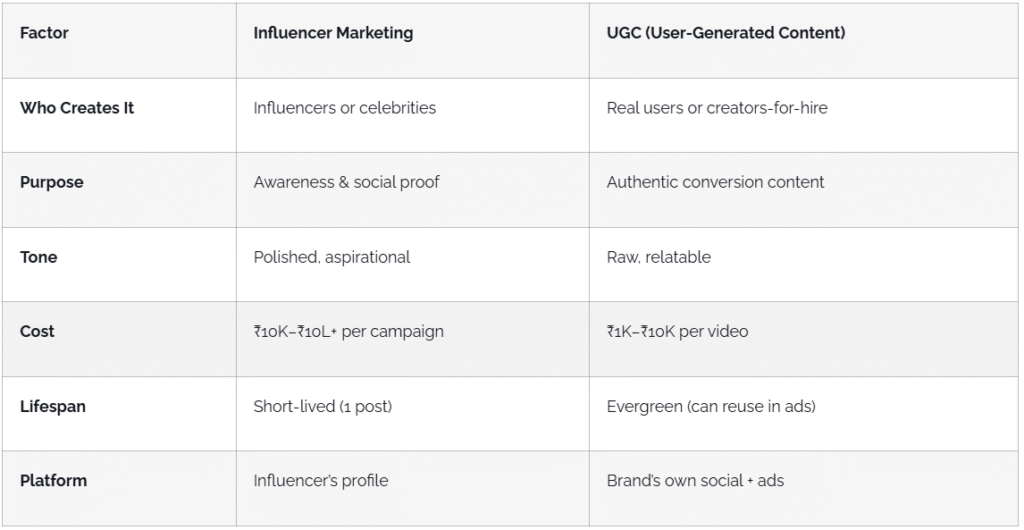
Understanding the distinction between influencer vs ugc marketing is crucial for allocating your marketing budget effectively. Let’s break down the key differences:
- Creator Motivation
Influencers create content as part of a business transaction. They’re compensated (through money, free products, or other perks) to promote your brand. Their primary motivation is professional—building their personal brand while fulfilling contractual obligations.
UGC creators are motivated by genuine enthusiasm for your product. They create content because they want to share their experience, not because they’re being paid. This authenticity shines through in the final content.
- Audience Size and Reach
Influencers typically have larger, more established audiences. A single influencer post might reach tens of thousands or even millions of people, depending on their following.
UGC creators usually have smaller personal networks. However, when brands aggregate UGC from hundreds or thousands of customers, the collective reach can be substantial—and often more targeted.
- Content Style and Polish
Influencer content tends to be more polished and professionally produced. Influencers have honed their photography, videography, and editing skills, creating aesthetically pleasing content that fits their brand aesthetic.
UGC is typically rawer and more authentic. It might feature less-than-perfect lighting or amateur photography, but this “realness” often makes it more relatable and trustworthy to consumers.
- Cost Structure
Influencer marketing requires significant upfront investment. Depending on the influencer’s tier, a single post can cost anywhere from ₹5,000-₹10,000 (nano-influencers) to ₹50 lakhs+ (celebrity influencers). Micro-influencers in 2026 typically charge between ₹25,000-₹2 lakhs per post in the Indian market.
UGC is considerably more cost-effective. While you might incentivize creation through contests, hashtag campaigns, or small rewards, most UGC is created organically without direct compensation. At Sociallyparin, we’ve seen brands generate hundreds of UGC pieces for the cost of a single influencer campaign.
- Control and Messaging
Influencer partnerships offer more control. Brands can provide briefs, approve content before posting, and ensure messaging aligns with campaign objectives. However, too much control can make content feel inauthentic.
UGC offers less control but more authenticity. You can’t dictate exactly what customers will say or how they’ll present your product, but this lack of control is precisely what makes UGC so credible.
- Performance Metrics
Influencer marketing is typically measured by reach, impressions, engagement rate, and sometimes conversions tracked through unique discount codes or affiliate links.
UGC campaigns are measured by volume of submissions, engagement on UGC posts, conversion lift when UGC is incorporated into marketing, and overall brand sentiment.
UGC vs Influencer Marketing: When to Use Each Strategy
The debate of ugc vs influencer marketing isn’t about choosing one over the other—it’s about understanding when each strategy serves your goals best.
When Influencer Marketing Makes Sense
- Product Launches: In influencer marketing trends 2026 introducing a new product, influencers can generate immediate awareness and reach large audiences quickly. Sociallyparin worked with a tech startup launching a new app in 2025, and partnering with tech influencers helped them acquire 50,000 users in the first month.
- Brand Awareness Campaigns: If your primary goal is reaching new audiences, influencers provide access to established communities that trust their recommendations.
- Educational Content: Complex products or services often require detailed explanation. Influencers can create tutorials, how-to guides, and demonstrations that educate potential customers.
- Aspirational Positioning: Luxury brands or products positioned as premium often benefit from influencer partnerships that reinforce their aspirational qualities.
- Quick Market Entry: New brands without an existing customer base can leverage influencers to quickly establish credibility and generate initial sales.
When UGC Marketing Works Better
- Building Social Proof: Nothing builds trust like seeing dozens of real customers raving about your product. UGC provides powerful social proof that influences purchase decisions.
- Long-Term Content Strategy: A robust UGC content strategy provides an endless stream of authentic content that can be repurposed across channels, reducing content production costs significantly.
- Community Building: UGC campaigns foster community by making customers feel valued and heard. When you feature customer content, you strengthen brand loyalty.
- E-commerce Conversion: Displaying UGC on product pages can increase conversions by 20-30%, according to industry benchmarks. Potential buyers want to see real people using real products.
- Budget Constraints: If marketing budget is limited, UGC delivers exceptional ROI. The content is largely free, and the authenticity often outperforms expensive production.
- Niche Markets: In specialized industries where trust is paramount, UGC from real customers within that niche carries more weight than influencer endorsements.
Developing an Effective UGC Content Strategy in 2026
Creating a successful UGC content strategy requires more than just asking customers to post about your brand. Here’s a framework Sociallyparin uses with clients:
Step 1: Make Sharing Easy and Incentivized
Create branded hashtags that are simple, memorable, and unique. Run contests or campaigns that reward customers for sharing their experiences. Even simple incentives like being featured on your brand’s social media can motivate participation.
A skincare brand we worked with launched a #RealSkinRealResults campaign, offering to feature customer photos on their website. This generated over 2,000 submissions in three months, providing authentic before-and-after content that traditional advertising could never achieve.
Step 2: Obtain Proper Permissions
Always secure rights to use customer content. Implement a clear process for requesting permission, whether through direct messages, terms and conditions for hashtag campaigns, or UGC rights management platforms.
Step 3: Curate Strategically
Not all UGC is created equal. Curate content that aligns with your brand values, showcases product benefits, and resonates with your target audience. Quality matters more than quantity.
Step 4: Repurpose Across Channels
Maximize UGC value by repurposing it across multiple touchpoints:
- Feature customer photos on product pages
- Create UGC galleries on your website
- Use testimonials in email marketing
- Incorporate UGC into paid social advertising
- Share customer stories in blog content
Step 5: Engage and Acknowledge
When customers create content about your brand, acknowledge and celebrate it. Comment, share, and show genuine appreciation. This encourages continued participation and strengthens customer relationships.
Step 6: Track and Measure
Monitor UGC volume, engagement rates, sentiment, and impact on conversions. Use tools like Google Analytics to track traffic from UGC sources and measure ROI.
Current Influencer Marketing Trends 2026
The influencer marketing landscape continues evolving rapidly. Here are the dominant influencer marketing trends 2026 that brands need to understand:
Virtual Influencers and AI-Generated Content
AI-generated influencers like Lil Miquela have paved the way for brands to create their own virtual brand ambassadors. These digital personalities offer complete control while still engaging audiences authentically.
Long-Form Video Content
With platforms like YouTube and TikTok emphasizing longer content, influencers are creating in-depth product reviews, tutorials, and vlogs that provide more value than quick 15-second clips.
Social Commerce Integration
Influencers are now directly facilitating purchases through shoppable posts, live shopping events, and integrated checkout features on platforms like Instagram and TikTok.
Diversity and Inclusion Focus
Consumers in 2026 expect brands to partner with diverse influencers who represent different backgrounds, body types, abilities, and perspectives. Tokenism is easily spotted and quickly criticized.
Platform Diversification
Smart brands aren’t putting all eggs in one basket. Sociallyparin recommends multi-platform influencer strategies that might include Instagram, TikTok, YouTube, and emerging platforms to reach audiences where they’re most active.
Transparency and Authenticity
The FTC’s stricter disclosure requirements have made transparency mandatory. However, this hasn’t hurt influencer marketing—it’s actually strengthened it by building consumer trust. Influencers who openly discuss partnerships while maintaining authentic opinions perform better than those who hide commercial relationships.
Combining UGC and Influencer Marketing: The Hybrid Approach
Here’s a strategy insight from years of experience at Sociallyparin: you don’t have to choose between influencer vs UGC marketing. The most successful brands in 2026 use both strategically.
Consider this hybrid approach:
Phase 1 – Influencer Activation: Launch with influencers to generate awareness and initial buzz. Their content reaches new audiences and establishes credibility.
Phase 2 – UGC Amplification: As customers begin purchasing based on influencer recommendations, encourage them to share their own experiences. Use branded hashtags mentioned by influencers to create continuity.
Phase 3 – UGC Repurposing: Aggregate the best UGC and use it across marketing channels, reinforcing the influencer message with authentic customer testimonials.
Phase 4 – Micro-Influencer Recruitment: Identify your most engaged UGC creators and develop them into brand ambassadors or micro-influencers, offering exclusive benefits or affiliate programs.
This cyclical approach leverages the reach of influencers while building the authentic social proof that UGC provides. A fitness apparel brand we worked with used this exact strategy, resulting in a 250% increase in customer acquisition at 40% lower cost per acquisition than influencer campaigns alone.
Measuring Success: UGC Marketing for Brands vs. Influencer ROI
- Reach and Impressions: How many people saw the content?
- Engagement Rate: Likes, comments, shares, and saves relative to follower count
- Click-Through Rate: Traffic driven to your website or landing page
- Conversion Rate: Purchases made using influencer-specific codes or links
- Cost Per Acquisition: Total campaign cost divided by customers acquired
- Brand Lift: Changes in brand awareness or perception measured through surveys
UGC Marketing KPIs
- Submission Volume: Number of UGC pieces created over time
- Participation Rate: Percentage of customers who create UGC
- Engagement on UGC Posts: How audiences interact with customer content
- Conversion Lift: Increase in conversion rates when UGC is displayed
- Content Production Savings: Reduced costs from using UGC vs. creating original content
- Customer Lifetime Value: UGC creators often become more loyal, higher-value customers
Real-World Success Stories
Case Study 1: Beauty Brand UGC Transformation
A mid-sized beauty brand partnered with Sociallyparin in early 2025 to shift from influencer-heavy marketing to a balanced approach. They had been spending 50,000rs monthly on influencer partnerships with moderate results.
We implemented a UGC content strategy that included:
- A branded hashtag campaign (#MyBeautyMyWay)
- Monthly contests featuring customer transformations
- UGC integration on all product pages
- Customer spotlight features on social media
Results after six months:
- 3,500+ UGC submissions
- 65% reduction in content production costs
- 38% increase in e-commerce conversion rates
- 4.2x ROI compared to previous influencer-only approach
- Maintained selective micro-influencer partnerships for new product launches
Common Mistakes to Avoid
In Influencer Marketing:
- Choosing Influencers Based on Follower Count Alone: Engagement rate, audience demographics, and brand alignment matter far more than vanity metrics.
- Over-Controlling Creative: Let influencers create content in their authentic voice. Over-scripted content feels like advertising and performs poorly.
- One-Time Partnerships: Long-term relationships build deeper authenticity and better results than one-off posts.
- Ignoring Audience Overlap: Partnering with multiple influencers who have the same followers wastes budget and creates audience fatigue.
- Skipping Performance Tracking: Without proper tracking codes and analytics, you can’t determine what’s working.
In UGC Marketing:
- Not Securing Rights: Using customer content without permission creates legal risks and damages trust.
- Only Featuring “Perfect” UGC: Overly curated UGC loses the authenticity that makes it valuable. Embrace real, imperfect content.
- Failing to Engage: When customers create content about your brand and you ignore it, you miss opportunities to strengthen relationships.
- No Clear Call-to-Action: Make it easy for customers to know how to share and what hashtags to use.
- Inconsistent Amplification: UGC strategies require ongoing commitment, not one-time campaigns.
The Future of Content Marketing: What's Next?
As we move through 2026 and beyond, several trends will shape how brands approach influencer and UGC marketing:
Increased Regulation: Expect more government oversight of influencer disclosures and data privacy in UGC campaigns.
AI Content Detection: Consumers and platforms will become better at identifying AI-generated content, making genuine human creation even more valuable.
Micro-Communities: Brands will focus on building small, highly engaged communities rather than broadcasting to massive audiences.
Video Dominance: Both UGC and influencer content will increasingly prioritize short and long-form video as platforms continue emphasizing this format.
Interactive Experiences: AR filters, virtual try-ons, and other interactive UGC experiences will become standard rather than innovative.
At Sociallyparin, we’re helping brands prepare for these shifts by building flexible, multi-channel strategies that can adapt as the landscape evolves.
Conclusion: Making the Right Choice for Your Brand
The real question with influencer vs UGC marketing isn’t choosing one over the other—it’s knowing when to use each strategy.
Influencer marketing works best for brand awareness, reaching new audiences, and creating professional content. UGC marketing for brands builds trust, provides social proof, and delivers better ROI through authentic customer voices.
The most successful brands in 2026 use both strategically.
For startups with limited budgets: Start with a UGC content strategy to build social proof, then add selective micro-influencer partnerships for specific campaigns.
For established brands: Use influencers for product launches while encouraging customers to create UGC simultaneously.
At Sociallyparin, we’ve helped brands combine both strategies effectively. The result? Better engagement, lower costs, and authentic connections with customers.
Ready to get started? Use influencer partnerships for reach and UGC for trust—together, they create a powerful marketing combination that resonates with today’s consumers.
Frequently Asked Questions
Influencer marketing involves paid partnerships with content creators who promote your brand to their followers. UGC marketing uses authentic content created by your customers without direct payment. Influencers offer reach and polish, while UGC provides genuine social proof and trust at lower costs.
Neither is universally better. UGC marketing for brands excels at building trust and providing cost-effective social proof. Influencer marketing works best for awareness and reaching new audiences. The most successful brands in 2026 use both strategies together for maximum impact.
Start by creating branded hashtags and encouraging customers to share experiences. Run contests, feature customer content on your social media, and request permission to reuse their posts. Repurpose UGC content across your website, emails, and ads for authentic marketing results.
Key influencer marketing trends 2026 include micro-influencer partnerships, long-term collaborations, AI-powered vetting, social commerce integration, platform diversification, and authentic transparency. Brands now prioritize engagement rates over follower counts and focus on genuine audience connections.
Yes, UGC marketing is significantly more cost-effective. While influencers charge ₹25,000-₹2 lakhs per post in India, UGC is mostly created organically by satisfied customers. Brands only invest in small incentives, contests, or featuring customer content—delivering better ROI.
Absolutely! Combining influencer vs UGC marketing creates powerful results. Use influencers for product launches and awareness, then encourage customer UGC for social proof. This hybrid approach at Sociallyparin has helped brands achieve 250% better acquisition rates.
UGC marketing for brands increases conversions by 20-30% when displayed on product pages. Real customer photos, reviews, and testimonials provide authentic social proof that builds trust. Shoppers want to see real people using products before purchasing.
A UGC content strategy is your plan for collecting, curating, and repurposing customer-created content. You need one to reduce content costs, build authentic social proof, strengthen community, and improve conversions. It provides endless authentic content for marketing campaigns.